
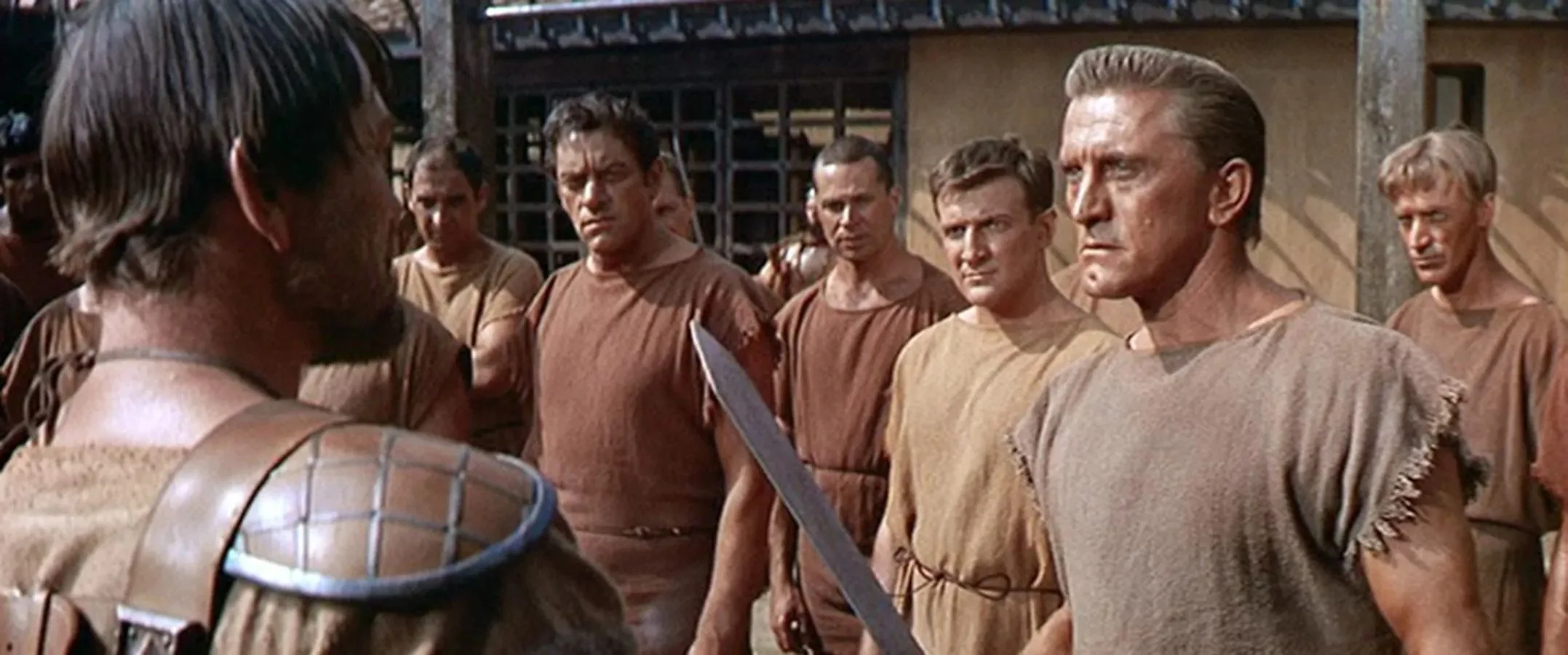
When looking at this movie, what’s the first thing that comes to mind: Kubrick or cinematic epic? Both might come eventually, but usually one of these two is dominant as the first thought.
And the follow-up question might be: which is the reason this film made the Top 100 list?
Interestingly, Kubrick himself might consider it the latter, as he doesn’t even include it within the canon of his work. And it’s true, unlike most of his films, where he had full control and we are seeing the vision of an auteur, this one was much more art by committee.
So because of this, or despite it, what makes it good enough to crack that infamous AFI list?
We explore that as we look at Spartacus, written by Dalton Trumbo and directed by Stanley Kubrick.
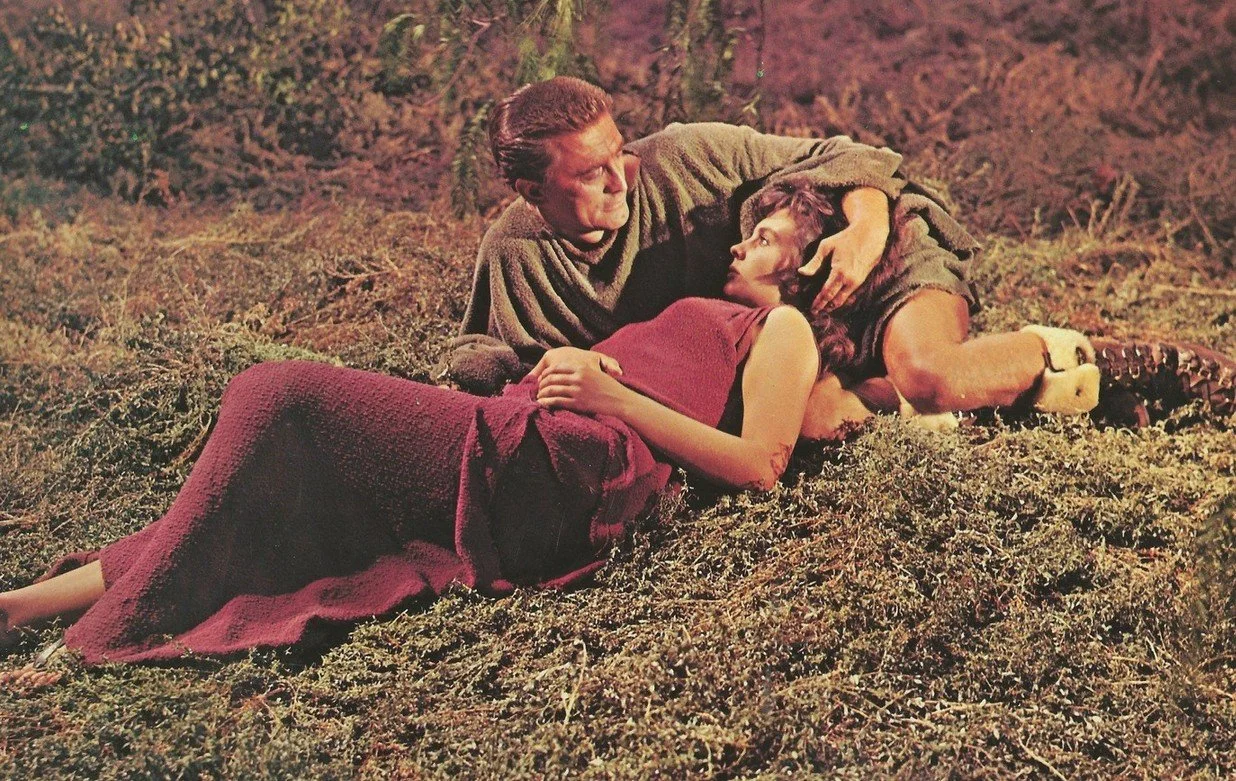
One conflict Kubrick had with the powers that be at the film studio was how much of a heroic legend to make the character of Spartacus. The studio very much wanted him to be heroic, after all, they had Kirk Douglas playing him. Kubrick, on the other hand, wanted Spartacus to seem much more like “just some guy.”
But this debate plays directly into the themes of the film. The main message seems to be that people deserve their dignity.
This comes into play as the Romans seem to believe they are something above everyone else. Crassus and other Romans think they are special and that the slaves are beneath them. Crassus believes “Rome is an eternal thought in the mind of God.”
Throughout the film, Spartacus reinforces this message, saying, “I’m not an animal,” and delivering the powerful line, “When a free man dies, he loses the pleasure of life. A slave loses his pain. Death is the only freedom a slave knows.”
His reinforcement of this message, along with his name being the title of the film, gives good evidence that he’s not just some guy.
However, another major theme in the movie is the individual vs. the collective and how they interact.
The Romans are a collective, which has spawned a sense of superiority that makes each major player feel like they are individuals in a sea of NPCs.
The slaves, however, gain their individuality, and it’s then that they can truly form a collective that has power.
This is demonstrated in the most famous line from the film: “I am Spartacus.” Spartacus shows the power, freedom, and dignity that come from being an individual, and collectively they are all able to assume that identity.
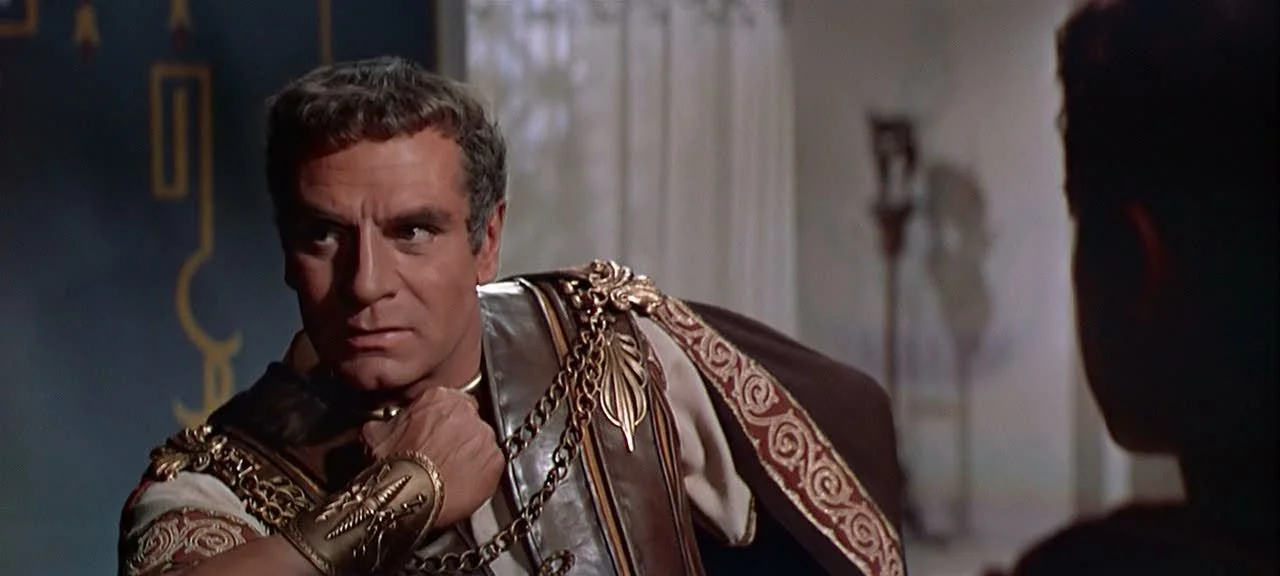
A hallmark of great Kubrick movies is the visuals, and this film is not short on them.
Sometimes I did forget I was watching one of his movies until I saw something breathtaking, like this shot right here.
And I could keep going, but I would just wind up including every still from the film.
Kubrick began as a photographer, and he approached filmmaking with the same mindset. Like photographers who take a large number of pictures to find the very best one, Kubrick would shoot take after take, to the point where he’d make actors like Scatman Crothers cry on later films, in order to pick the best from many options.
Here, he did not get to do as many takes as he wanted, as the studio pushed for more setups per day, but his artistic eye still came through. The movie is mesmerizing.
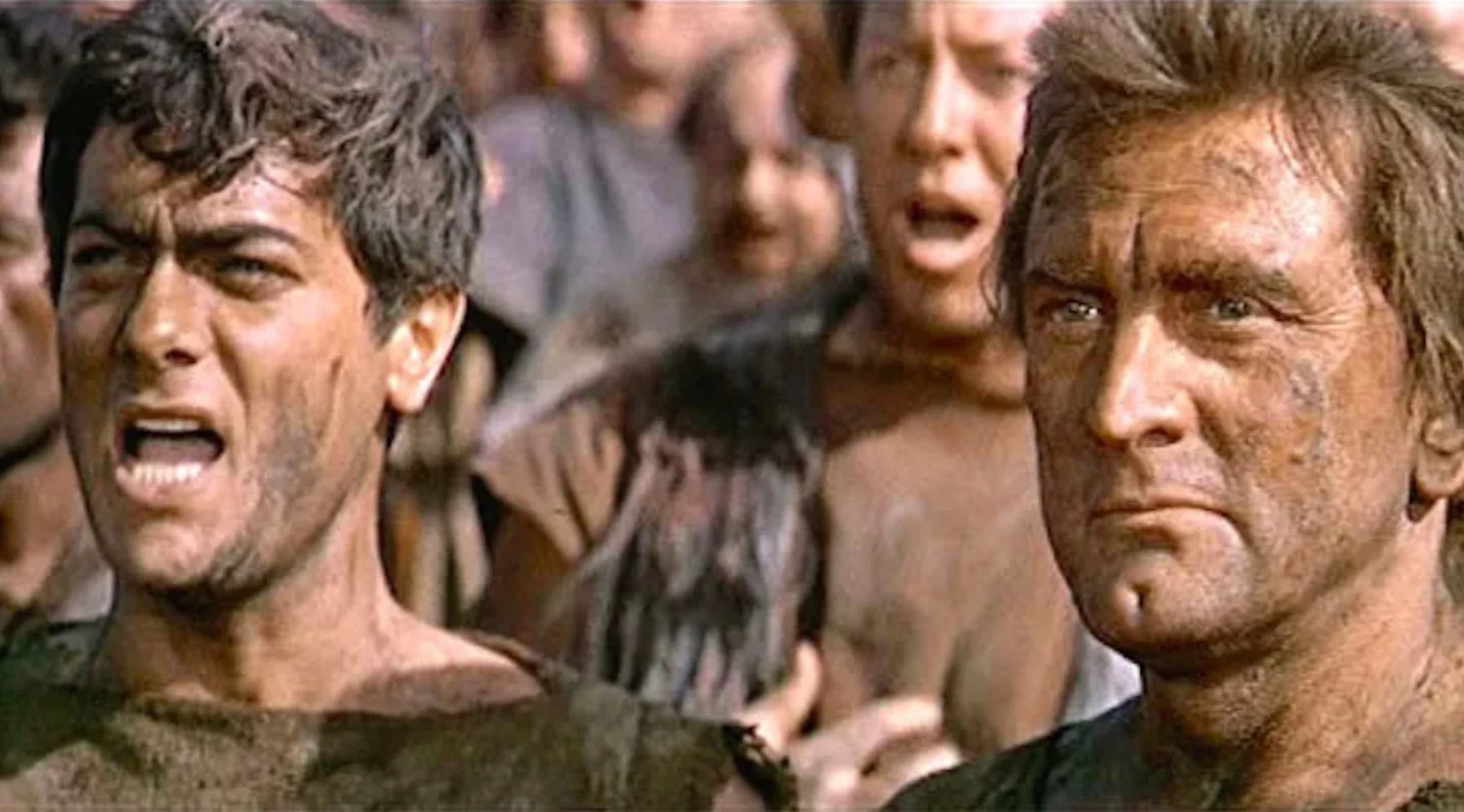
Some of my favorite films on the list are Dr. Strangelove, 2001: A Space Odyssey, and A Clockwork Orange. I love Kubrick films.
So would I consider this to be one of them too?
Not quite.
I agree with him that it isn’t fully one of his movies, as he didn’t have the same creative freedom he later enjoyed.
But that’s part of the thing. Filmmaking is a creative process, but it’s also led by someone with a vision.
With Spartacus, Kubrick had not yet fully proven himself, and the studio treated the filmmakers like the Romans. They were a collective, with individuals sometimes fighting to stand out.
Once Kubrick’s genius was proven, though, the process was different. The people who worked for him trusted him. They became individuals, but individuals who trusted in the vision of another individual.
When it comes down to it, Kubrick was just some guy, but he was some guy who inspired the people he worked with to want to say:
“I am Kubrick.”
“I am Kubrick.”
“I am Kubrick.”