
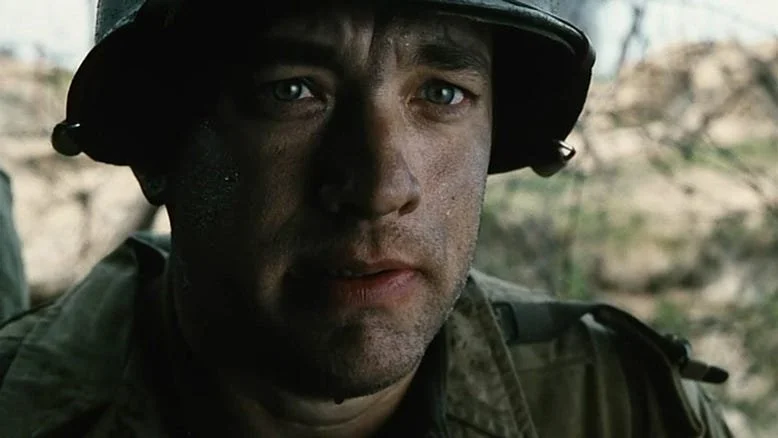
What movie comes to mind when you think about Spielberg? For many, Jaws is the frontrunner. Some think of Raiders. Some think of E.T., Close Encounters, Catch Me If You Can.
Some might even think about the emotionally tough Schindler’s List, which is tough, but, like the girl with the red coat, has that Spielberg touch of color.
Some might think of Back to the Future, which he didn’t direct, but many think he did, or Poltergeist, which it seems he directed all but in name.
My assumption is that most people don’t immediately think of the one that we’re covering this week. And that’s interesting, because it often goes on the shortlist of his best movies ever. I mean, hell, it’s on this AFI list of 100 greatest movies.
So it feels like a departure, but it still gets itself considered to be one of the greats. So let’s do what we do and investigate why.
Here we are with 1998’s Saving Private Ryan, written by Robert Rodat and directed by our old friend, Steven Spielberg.
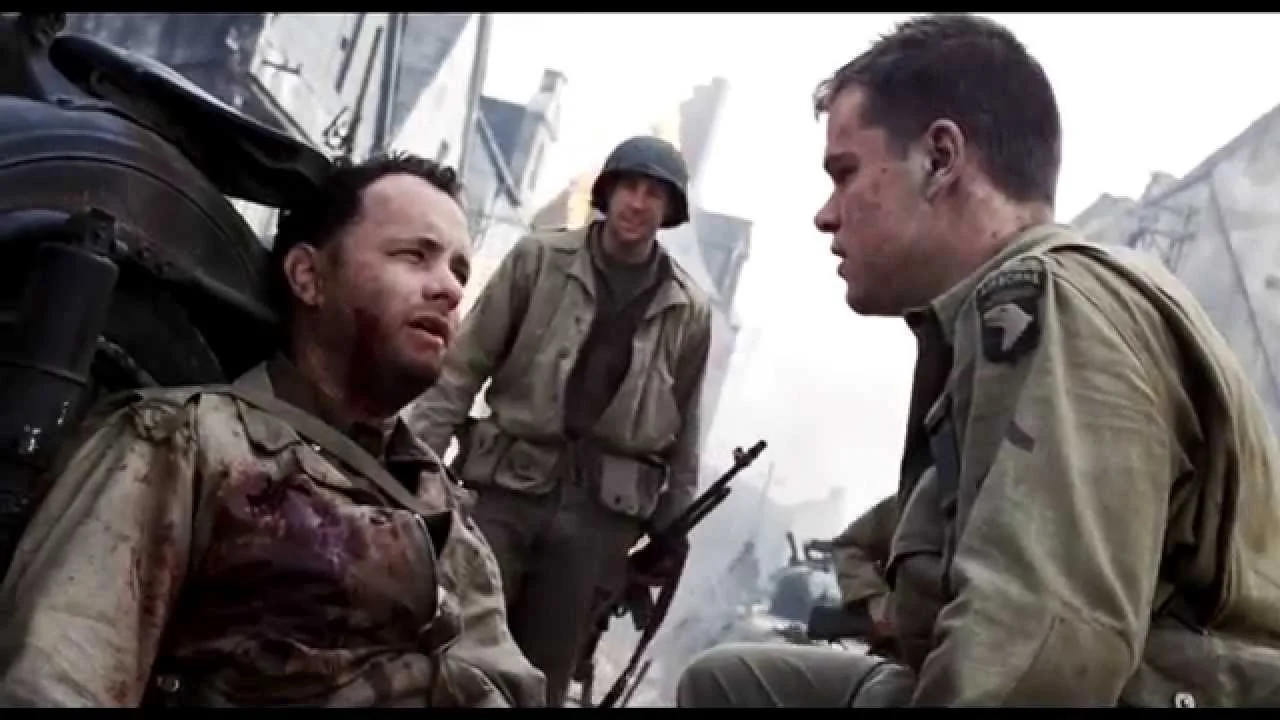
As I always look at the message of the movie, and as I discovered, a side message of all the war movies we’ve covered so far is “war is hell,” it’s apparent that, like those, this movie carries that message, but it also carries another.
Here, my first instinct was that the message is “compassion is a necessity,” but as I finished the movie, I realized that it was close to that, but not quite it. The message is more “compassion is a virtue.” Key distinction to come.
Throughout the movie, the soldiers are ordered to carry out an act of compassion, saving Ryan so his mama won’t lose all her kids, but none of them really want to at first. Even Miller, played by the nicest guy in Hollywood himself, Tom Hanks, isn’t super into the mission.
We figure out, though, that this is because war has made them hard. They were all nice guys outside of it. Miller was a schoolteacher. As they get more in touch with their humanity, they realize how important their mission actually is, even saying it’s the most important thing they could have done.
They experience this compassion too, as they opt not to kill the Nazi, ironically dubbed Steamboat Willie (played by “Mickey,” the second-nicest guy in Hollywood), after he begs for mercy.
But this is why I adjusted my interpretation of the message from “necessity” to “virtue”: Steamboat Willie comes back and kills Miller. Then, when he begs for mercy again, he’s not granted it.
I think this causes many to view the message as “compassion is a weakness,” but that’s not true. That would contradict the rest of the film. Miller did the right thing by sparing his life the first time. He did the right thing, even though it directly led to his death, the consequences don’t negate the virtue.
However, when Steamboat Willie tries to take advantage of this compassion, he’s not granted it. He’s lost this gift.
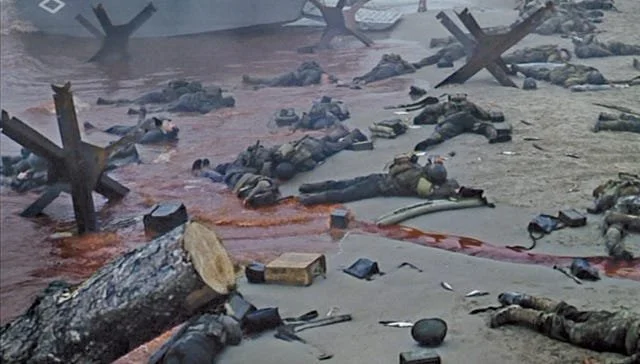
That beginning battle scene is probably the most famous part of this movie. This is one of those scenes that is studied in film class after film class, and is responsible for those Best Editing awards that the movie got.
There’s not much to be said about the filmmaking in this battle that hasn’t already been said. I mean, of course it’s awesome.
So I want to get at a bigger question: why? Why is it there?
My hunch is that it’s because Spielberg knows that he’s going to Spielberg. He’s going to have charming characters that we fall in love with and a certain degree of pleasantness. He can’t help it. Spielberg’s movies are even charming when people’s hearts are getting pulled out of their chests.
Despite the charm, he still needs to get across the fact that war is hell. He needs to put us in that space. He needs to make it clear what exactly we’ll be saving Private Ryan from.
And, of course, he does it with style.
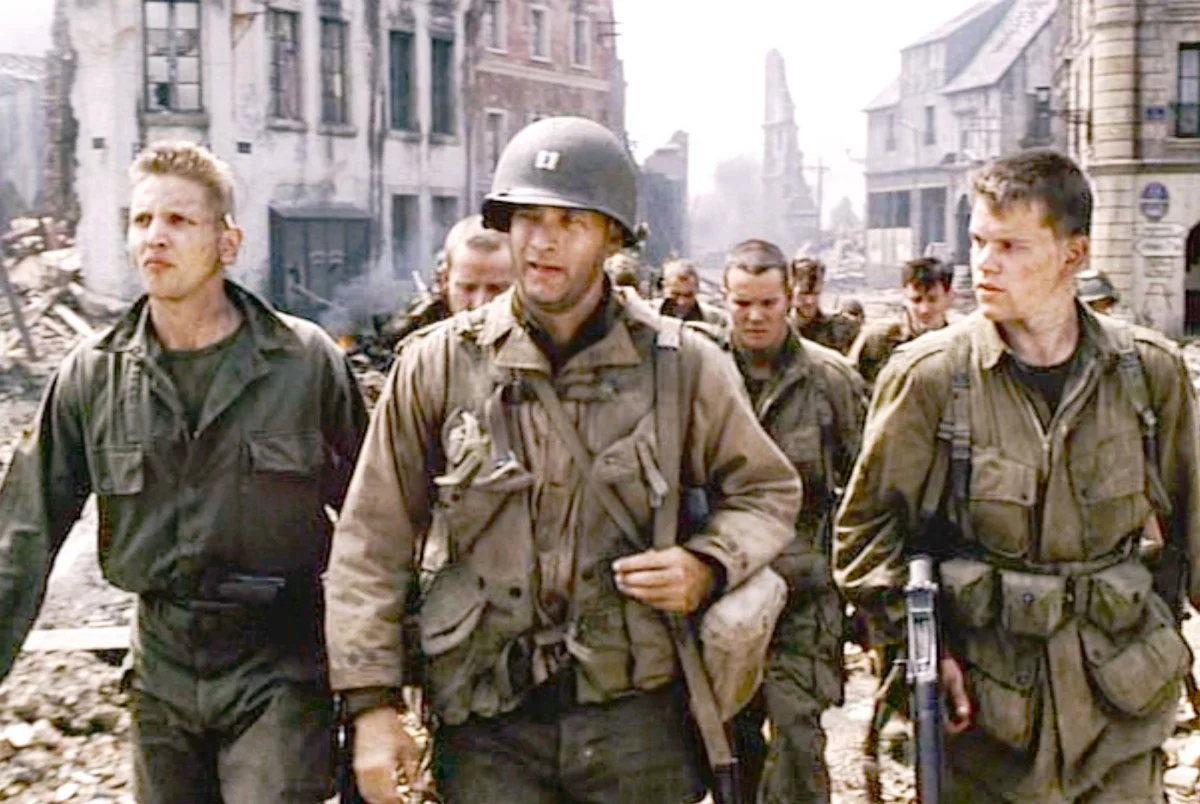
This all takes me back to my original question. As predicted, Spielberg is still his charming self in this. It’s not nearly as much charm as in some of his other movies, but it’s there.
Why is this not a movie that people usually think of first when they think about the director?
I think a big piece is that he was making this in honor of his dad, Arnold, who had served in World War II.
Yes, Spielberg often creates outside of his own experiences, whether it’s in Neverland or a world where aliens visit us.
Even in his earlier takes on World War II, and there have been a lot of Nazis in a lot of Spielberg films, it feels as though we’re very much with him the whole time.
But this one feels even more removed. Especially with that beginning, with Spielberg taking us to a level of raw, uncharming violence he doesn’t normally take us to, this is a movie where, as much as his touches do show up, he’s purposefully putting the audience at an arm’s distance.
Perhaps the most personal touch is at the end, when Ryan visits Miller’s grave and asks if he did enough with his life to justify the sacrifice.
Maybe I’m looking too deep, but I think in some ways Spielberg might be asking that same question.
But with five movies on this list, the answer seems to be a resounding “yes.”