
So here we go. I’ve been avoiding the American war movies on this, not because they’re so heavy and depressing, but because… yes, actually, it’s exactly because they’re heavy and depressing.
Not to take anything away from their greatness. These stand up as some of the best movies ever made. But diving into them deep enough to write articles on them is an emotional task.
This is compounded by the fact that this is an Oliver Stone movie, and all of them — even the ones not about war — tend to feel like an elephant sitting on your chest.
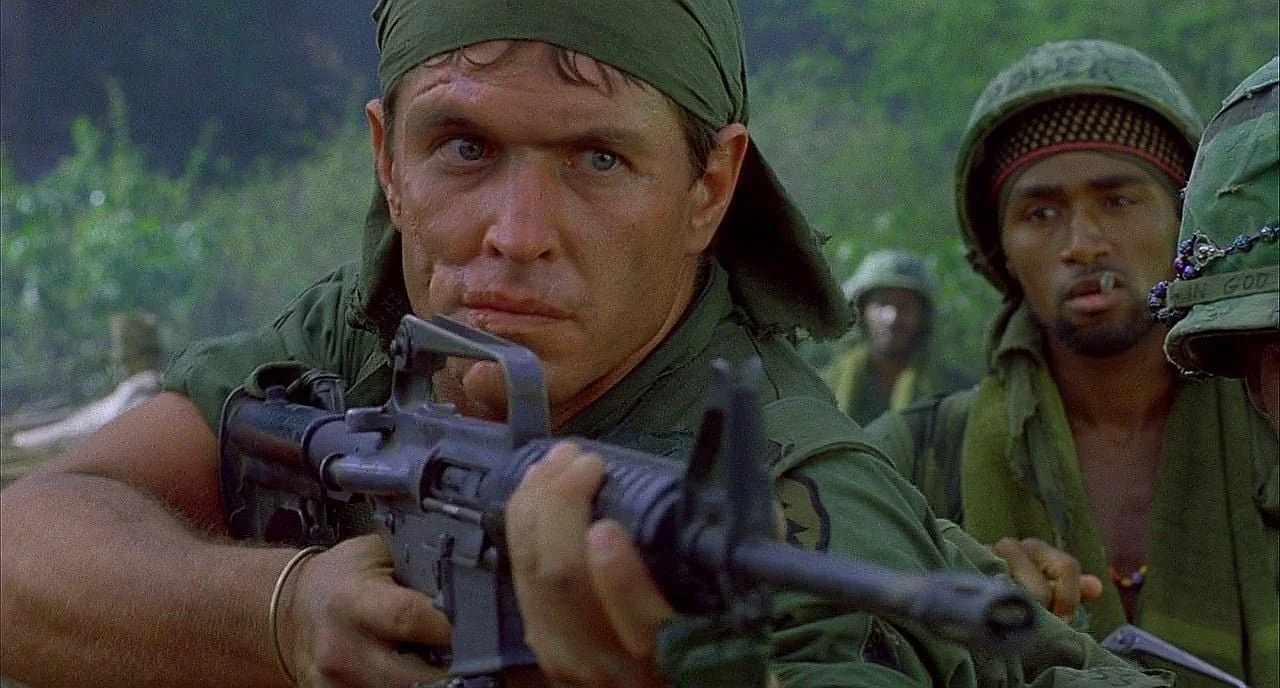
But I’m finally going into the trenches. Here we are with 1986’s Platoon, written and directed by Oliver Stone.
My first instinct when uncovering the message of the movie is to say that it’s “war is hell.”
I mean, it works for it. But then again, all war movies deliver that message. So I think I need to dive a bit deeper and see what side of this, in particular, Platoon is tackling.
One thing I come away with is the message: “war creates an us vs. them mentality.”
This seems to hold up over the course of the film. Not only is this taking place in a war of U.S. vs. Vietnam (with the added element of North Vietnam vs. South Vietnam), but this theme comes up again and again in the film.
The Americans in the movie, good or bad, see the other side as outsiders. The way they treat the Vietnamese villagers in that scene is heartbreaking, the full gravity of it hitting when you see the daughter of the chief crying for her dead mother.
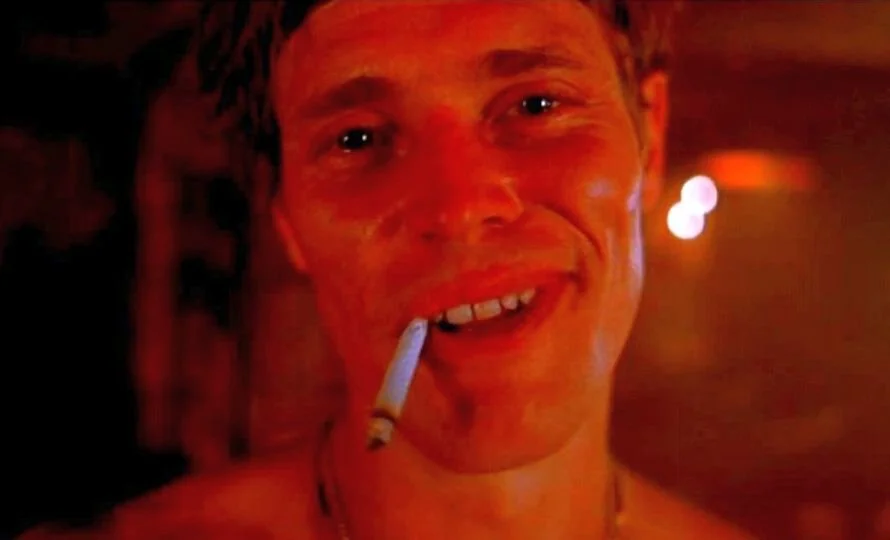
And, of course, the two camps in the platoon itself, one being led by Elias and the other being led by Barnes, are in direct opposition. You have one side smoking joints and listening to Smokey Robinson, while the other side is thirsting for blood.
The conflict directly between Elias and Barnes also represents this, putting the two of them in direct war against each other, finally to the point where Barnes feels the need to murder his own fellow soldier.
This affects Taylor greatly and causes him to see Barnes as more of an enemy than those he’s fighting.
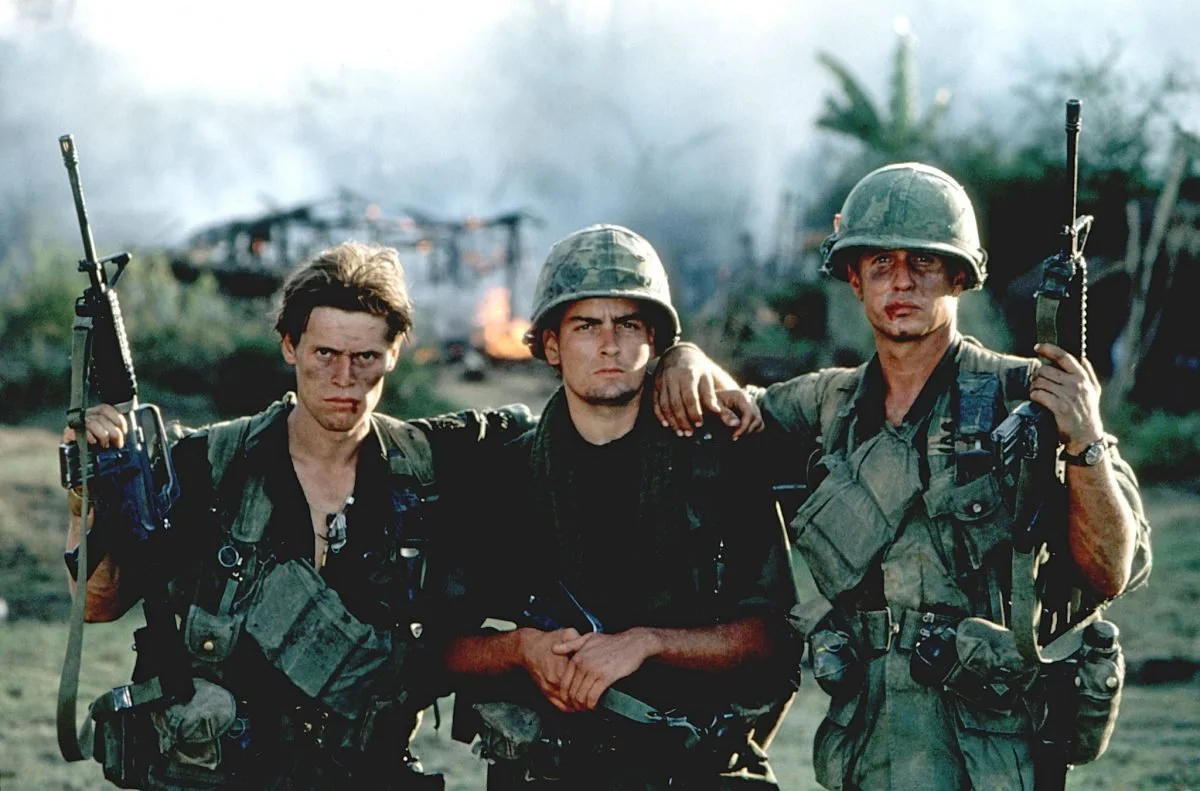
As I mentioned, Stone movies get dark.
And there’s something about the soundtrack in this that heightens that sad emotion. Similar to the music in Midnight Express, the score (by Georges Delerue and Samuel Barber’s “Adagio for Strings”) is brutal.
Taylor’s inner monologue is also heartbreaking, as you can hear the sound of a defeated man’s voice: “I think now, looking back, we did not fight the enemy; we fought ourselves.”
Add this to the constant sounds of battle, the crying, the screaming, and the sounds of the film are something incredibly haunting.
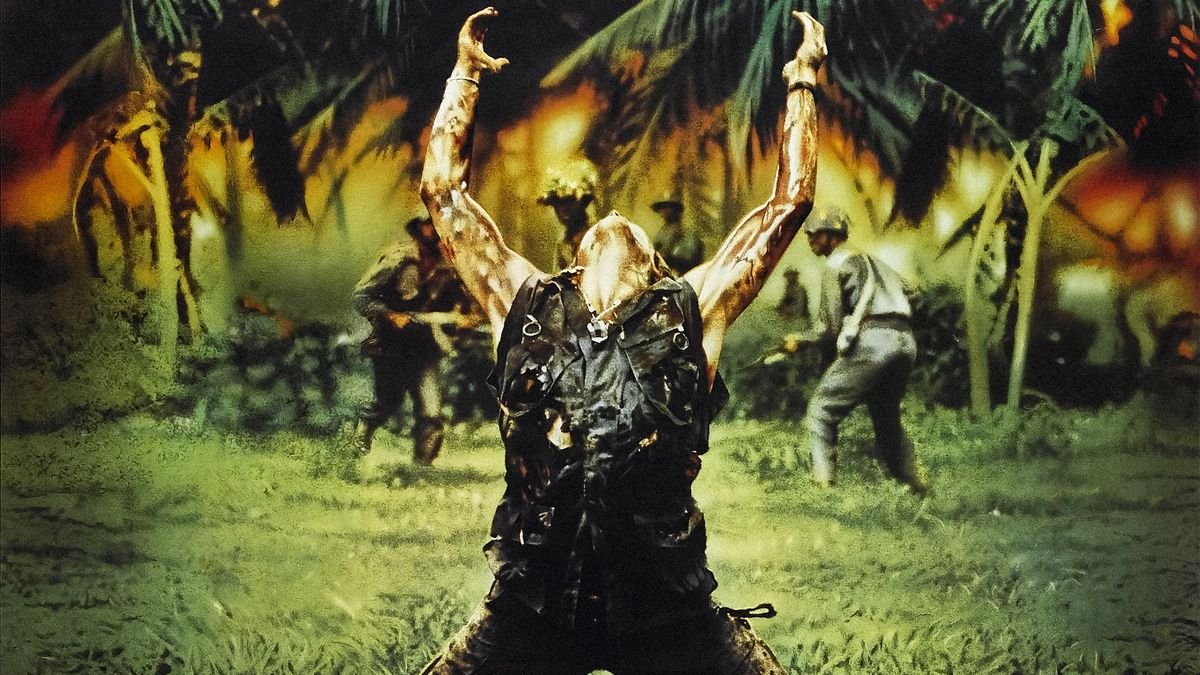
actually had to fight in this war and live the lives these characters lived, my dad included.
And that’s why these movies have to be so heavy. Unlike The Green Berets or any other movie that glamorizes war, this is something that can change people and give them trauma for life.
And art like this gives us a glimpse into the horror they must have experienced without actually having to live it ourselves.
It’s tough, but it’s supposed to be.
And I’ve got several more of these to go.